
I’m a bit of a fan of lists and if you are too this might be of intrest.
There is nothing so satisfying of making a list and checking off the jobs as you get them done. There is a trick and an art to lists to make them work for you rather than against you, but this article isn’t about that. Its about an idea I read in 18 minutes by Peter Bregman which suggests you use lists instead to manage you life for balance. The rub of the idea is create a number lists for yourself each assigned to particular topic with an other 5% box as a catchall.
Here are my favourites Work, A work project, Career, Family, Hobbies. OK thats not quite 6 lists but you get the idea. Now fill out these lists with your todo’s and ask yourself , is it balanced? Your answer depends on your choices and you can use this list to make sure you are making time for yourself, that you are looking after your career rather than just your work. That family and hobbies are given appropriate space. of course these are just my headings, yours may be quite different but hopefully you get the idea.
Epilogue: I use this list strategy like any tool in the toolbox. Its not on my ‘work bench’ every day, but instead comes out for a period of time when i am aware i need to do some rebalancing – then its back in the tool box again
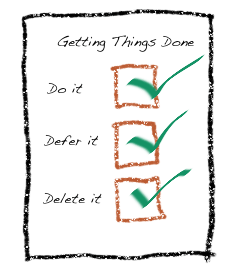 One of my favourite books of all time, in the productivity space is Getting Things Done by David Allen. Its a great read and i was able to take away a few key things that enhanced my ability to get things done! Probably the most important one is his process for looking at emails which can easily become the scourge and time eater of your day, but its also really handy for the short jobs that crop up during the day. If its quick then just Do it on the spot, if its going to take a bit longer then Defer it (but make sure you capture than in some system like flagging it a list or calendar entry or just Delete it. These days with email being what it is I don’t tend to delete , I just let it run off the bottom of the screen..it’s pretty much the same thing.
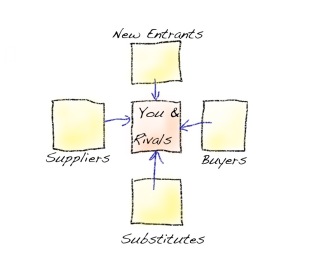 Where ever you are in your business chances are you want to make it a grow a bit or a least make it a bit easier on yourself in the trenches. This is where Porters fives competitive forces can come in really handy. Just by asking yourself these 5 simple questions you can get a better idea of your competitive landscape no matter what kind of business you are running.
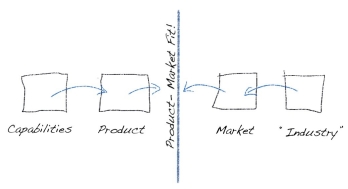 I still do quite a bit of work in the university sector. (I guess you get that when you come from a research background). Universities are full of amazing and very capable people with great ideas. These ideas are often well tested in the laboratory too!
 There is a great strategy book about a fat smoke (Strategy and the Fat Smoker” by D. Maister). You can read the whole book if you like but the Itty Bitty take on it is this: The fat smoker knows he has to give up the cigars, the booze and start exercising to lose some weight…but nothing actually happens until the heart attack. Then and only then does he take action and do something about it. Then once the crisis is over its probably not long till he’s back on the booze and the fags.
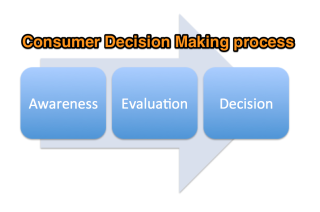 It takes a long time for a prospect to actually make the decision to buy a product or service. There are several processes they go through, and at each step there is a funnelling, or more correctly a loss, of prospects. This is called the consumer decision making process. If you understand your customer you can help them through each of these stages by embedding information and values that will aid a successful conversion.
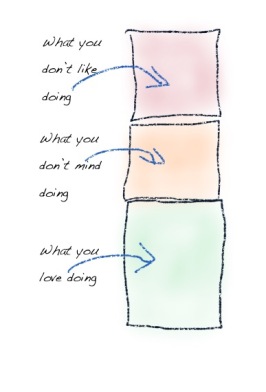 It’s an attractive idea isn’t it?, take something you really enjoy doing and turn it into your career. The trouble is a dream turned into reality can sometime become a nightmare. Somewhere in the process it could also takes away the very thing you love,
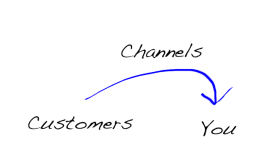 There are only 3 things you need to succeed in business.